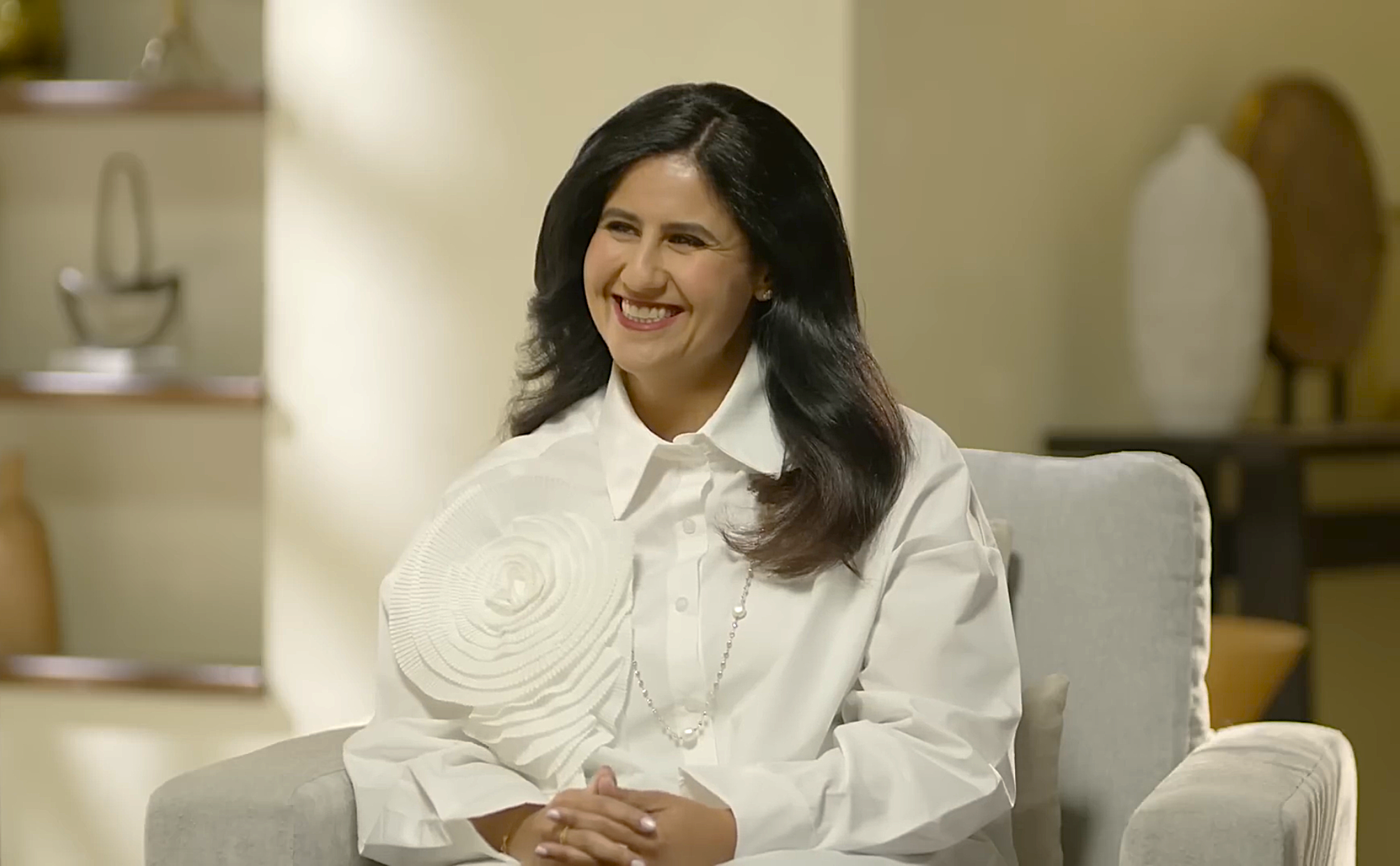
“Language is the door to culture.” Alanoud Alsabah, takes us around the world with her knowledge of language and culture.
Described as someone who is full of surprises, Alanoud Alsabah is an international relations researcher and cultural diplomat who holds a bachelor’s degree in accounting, a master’s in Chinese studies and Spanish and Latin American studies, and a PhD in Kuwaiti-Chinese relations. She is also a polyglot proficient in Arabic, English, Tagalog, French, Spanish, Portuguese, Italian, Korean, Japanese, Chinese, Russian and attempts at German. Turning her passion for traveling, culture, art and literature into a career rather than a hobby.
Despite her passion for languages, Alanoud studied accounting in university due to circumstances that prevented her from going abroad. She interestingly links into learning a language as both accounting and linguistics consist of learning a formula or structure and applying it. Afterwards she started taking international relations workshops and continued in language, landing her a job as a general secretary at the ministry until she decided to continue her education. Her initial wish was to major Latin American studies, but it was not available at the time which made her take Chinese studies instead to try something new that matched her newfound love for calligraphy, continuing with Hispanic literature while doing her PhD.
The primary theme of this sit down is language, Alanoud describes her passion for language as something that has been present since birth. she recalls coincidentally picking up Tagalog under the age of five by being around her domestic helper, she later started French as it was mandatory in her school, and that kicked off her journey of learning languages. At a time before the internet and translation bots, traveling helped her a lot in practicing to use the language since one was forced to be put in a situation to communicate in the country’s native tongue. She describes the Spanish language as the language of her soul, despite it not being her mother tongue, she learned Chinese through it rather than through English or Arabic, and it started a new journey for her, Kuwaiti-Chinese relations. There was a lack of recent archives on the topic so she decided to conduct her own research in China and do as much as she can with the time she was given, discovering the overlapping between their culture and ours.
A Lei Wa Lakom conversation is not complete without the Kuwaiti Woman, and how she is a huge part of the diplomatic culture. Part of Alanoud’s research findings revealed that there was contact between the Kuwaiti and the Chinese Woman, which made her contact them and learn about the importance of women; especially in the 1980s when Kuwait’s government would host foreigners, a Kuwaiti woman was always present. “Highlighting the woman reflects the civilization of the state.”
She briefly touches on her love for writing poetry which is something she kept private for 10 years until the event “Peru’s experience in poetry” where she performed a poem entirely in Spanish about the duality of silence, and the difference between needed silence and unwanted silence and loneliness.
She concludes with a response to “What is next?” reminding us that our goals develop with time and growth, emphasizing how when a goal is reached, it is natural for us to set new goals for ourselves. As a lover of language, culture, art, and calligraphy she hopes to continue to grow with this passion.
Ultimately this conversation will offer viewers a new lens into the world of language, culture and art, and teaches us to reshape how we approach our goals.
.png)